Ingredient guide · Miso dispatch
Miso, one ingredient in many forms
White, yellow, red, rice, barley, soybean: the names on a tub of miso describe different parts of the paste. This guide separates the useful shorthand from the underlying categories, then helps you choose a miso for the food you want to make.
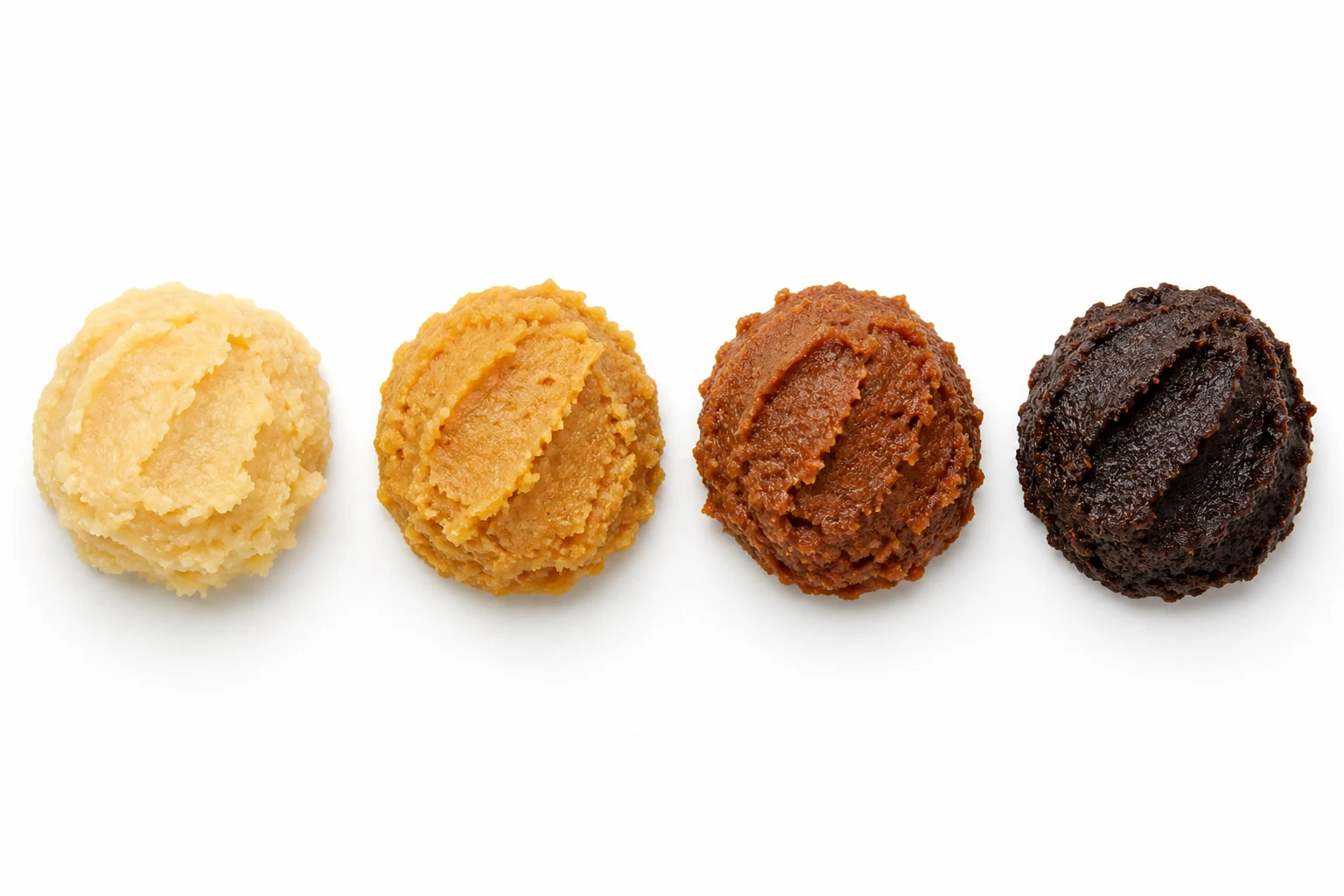
First principle
Color is shorthand. Koji tells a different story.
Miso is made by fermenting soybeans with salt and koji, a grain or soybean culture prepared with Aspergillus oryzae. Japanese references commonly classify miso by the material used to make that koji: rice miso (kome), barley miso (mugi), soybean miso (mame), and blended miso (chōgō).
White, light, and red describe appearance and broad style. They are useful at the shelf, but two similarly colored tubs can differ in grain, salt, koji proportion, fermentation, and regional practice. The Japanese Ministry of Agriculture's fermented-food guide treats raw material, taste, and color as separate ways to classify miso; the Kikkoman Food Forum overview likewise describes both ingredient-based and color-based groupings.
Use color to predict intensity, then use the ingredient list and the producer's tasting description to decide. Once the tub is open, taste a small dab before seasoning the rest of the dish.
A working comparison
Four useful starting points
These profiles are tendencies, not promises. Miso is a living regional category, and producers can make pastes that sit between the neat rows of a comparison chart.
White miso
Shiro miso
- Color cue
- Pale cream to warm beige
- Flavor tendency
- Usually the mildest and sweetest of this group, with a soft fermented aroma.
- Good starting applications
- Dressings, delicate soups, vegetable glazes, sauces, and recipes where miso should round out rather than dominate.
White is a color-and-style cue, not a complete formula. Many white misos use rice koji and a relatively high proportion of koji, but recipes vary by producer and region.
Light or yellow miso
Tanshoku miso
- Color cue
- Golden beige to tawny yellow
- Flavor tendency
- Often balanced: more savory depth than a sweet white miso, without the force of many red misos.
- Good starting applications
- Everyday soup, marinades, sauces, roasted vegetables, and the first tub for a cook who wants one flexible paste.
“Yellow” is useful grocery-store shorthand, but it does not identify one standardized recipe. Check the grain, ingredients, and tasting description too.
Red miso
Aka miso
- Color cue
- Rust red to deep reddish brown
- Flavor tendency
- Generally fuller, salt-forward, and more assertive, sometimes with roasted or earthy notes.
- Good starting applications
- Hearty soups, braises, robust marinades, mushrooms, eggplant, and dishes that can carry a deeper fermented flavor.
Red describes the finished color, not the koji grain. Rice-, barley-, and soybean-based misos can all develop darker color.
Soybean miso
Mame miso
- Color cue
- Deep brown to dark mahogany
- Flavor tendency
- Dense, deeply savory, earthy, and commonly less sweet than rice-koji miso.
- Good starting applications
- Simmered dishes, strong broths, dengaku-style glazes, and blending with a lighter miso for added depth.
This is a raw-material category: soybeans provide the koji as well as the body of the paste. Not every soybean miso should be called Hatcho miso.
At the grocery shelf
Read past the color word
- Find the koji base. Rice, barley, or soybean tells you more about the style than package color alone. English labels may list the grain directly or name rice koji or barley koji.
- Check whether it is paste or a prepared soup base. A tub labeled “miso” may include dashi or other seasonings. That can be convenient, but it will behave differently from unseasoned paste in a recipe.
- Use the producer's taste words. “Sweet,” “mellow,” “rich,” and “robust” are not universal standards, but they are often more actionable than a pale or red lid.
- Let the dish break the tie. Choose mild miso when other flavors are delicate, stronger miso when it must remain present after simmering, or blend two pastes when you want both roundness and depth.
The Kikkoman miso glossary offers a compact description of common light and dark styles. For a broader official introduction to regional Japanese fermented foods, see the Ministry of Agriculture's soy sauce and miso collection.
Put the comparison to work
Begin with the recipe, then adjust the paste
Our first two recipes use white miso for a mellow, savory-sweet base. A more robust miso can work, but begin with a little less, taste, and rebalance the sweetness and salt rather than assuming every paste substitutes identically.
Further reading